Bird Enrichment at Home: Simple Ways to Keep Pet Birds Mentally Active
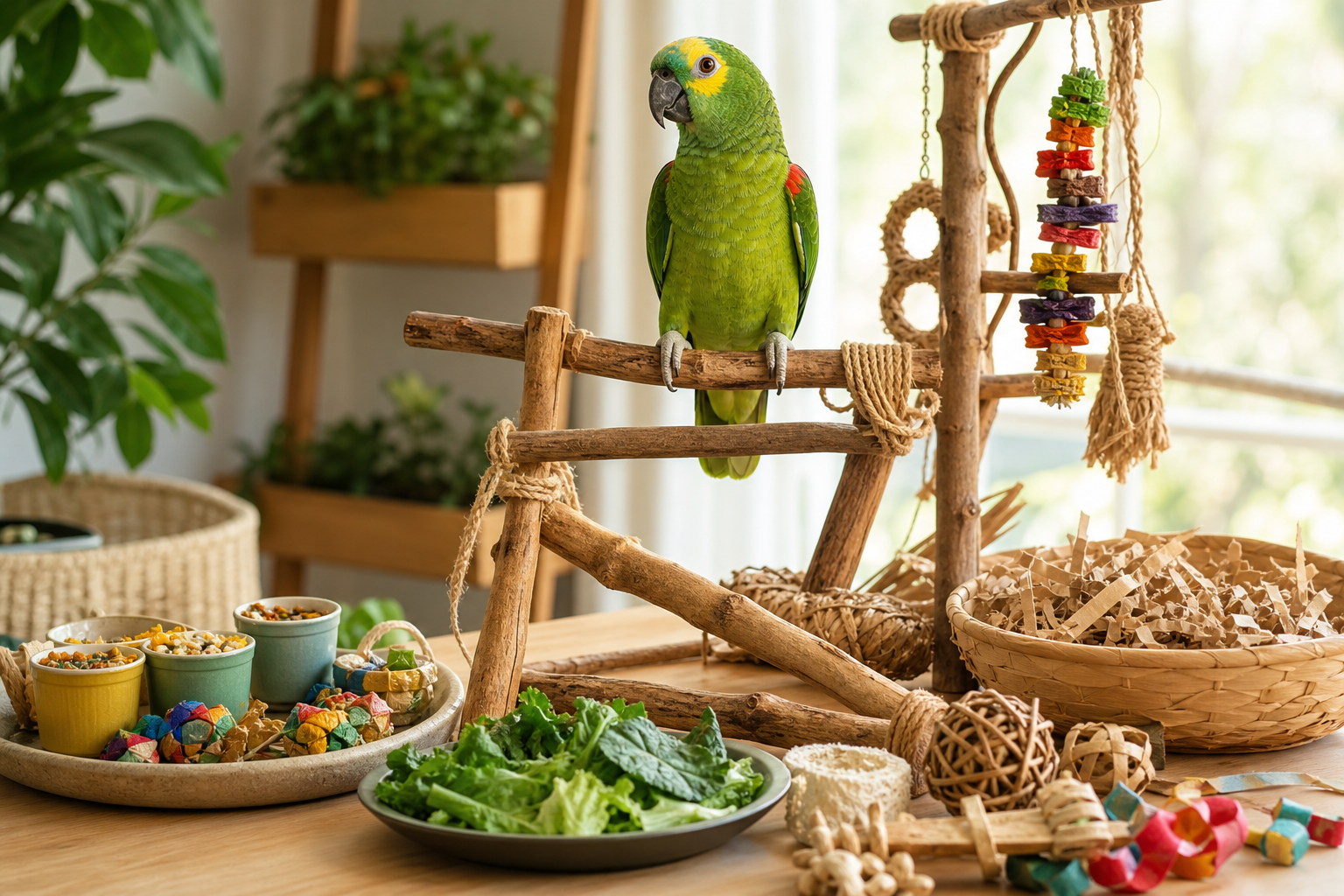
Pet birds are intelligent, curious animals that need more than food, water, and a clean cage. In the wild, many birds spend large parts of the day flying, foraging, climbing, socializing, and exploring changing environments. At home, a safe routine is important, but too little stimulation can lead to boredom and unwanted behaviours such as excessive screaming, feather damaging, or repetitive pacing.
Good enrichment helps pet birds use their natural behaviours in healthy ways. It does not need to be expensive or complicated. With a thoughtful setup and a few regular changes, you can create a more interesting daily life for your bird while keeping safety in mind.
What bird enrichment really means
Enrichment is anything that encourages your bird to think, move, explore, and interact with its environment. The goal is not constant excitement. The goal is appropriate mental and physical activity that suits the species, age, personality, and confidence level of the individual bird.
Useful enrichment often supports one or more natural behaviours:
- Foraging for food
- Climbing and balancing
- Chewing and shredding
- Vocal interaction and social contact
- Problem solving and exploration
- Bathing and preening
Even small birds such as budgies, canaries, and cockatiels benefit from variety. Larger parrots usually need even more structured enrichment because they are highly intelligent and often very active.
Signs your bird may need more stimulation
Every bird is different, and behaviour can change for many reasons, including stress or health problems. Still, a lack of enrichment can contribute to common issues. You may need to review your bird’s daily routine if you notice:
- Frequent screaming or calling without an obvious trigger
- Chewing cage bars constantly
- Feather picking or over-preening
- Repetitive movements such as pacing or head bobbing
- Low interest in toys or surroundings
- Frustration during time alone
- Weight gain linked to inactivity
If a behaviour change is sudden, severe, or combined with signs of illness, contact an avian veterinarian or a qualified bird professional rather than assuming it is only boredom.
How to build a simple enrichment routine
Many owners buy toys but do not have a plan for how their bird will actually use them. A better approach is to create a daily and weekly enrichment routine.
Step 1: Start with natural behaviours
Watch what your bird already enjoys. Does it shred paper, climb ropes, toss objects, or search through food? Use those preferences as a guide. Enrichment works best when it matches the bird’s natural interests.
Step 2: Offer variety without overload
Too many changes at once can frighten some birds. Introduce one or two new items at a time, especially with shy individuals. Place new objects near the cage first if your bird is cautious, then move them inside when the bird appears comfortable.
Step 3: Rotate items regularly
Birds often ignore toys they see every day. Rotate toys, perches, and activity stations to keep the environment interesting. You do not need a large collection. A smaller set used in rotation is often more effective.
Step 4: Include active and quiet options
Some enrichment should encourage movement, such as climbing areas or hanging toys. Other options can be calmer, like a foraging tray, soft music, or supervised window time in a secure area. Balance matters.
Easy enrichment ideas for pet birds
Foraging activities
Foraging is one of the most valuable forms of enrichment because it makes mealtime more mentally engaging.
- Wrap a small portion of bird-safe food in plain paper for your bird to tear open
- Hide pellets or treats in cardboard cups or safe foraging toys
- Scatter food in a shallow tray filled with clean paper strips
- Thread leafy greens through cage bars to encourage exploration
Begin with easy puzzles so your bird succeeds quickly. If food is too difficult to access, your bird may become frustrated and give up.
Shredding and chewing materials
Many pet birds enjoy destroying safe materials. This is normal and useful behaviour.
- Untreated paper
- Plain cardboard
- Bird-safe wood toys
- Palm leaf or seagrass items made for birds
- Vegetable-tanned leather parts in bird toys when appropriate
Always choose products intended for birds or carefully check that homemade items are free from toxic glues, inks, loose threads, sharp metal, or unsafe coatings.
Climbing and movement opportunities
Physical activity supports both fitness and confidence. Add variety with:
- Different perch widths and textures
- Rope perches used safely and checked for wear
- Ladders and swings for birds that enjoy them
- A supervised play stand outside the cage
- Safe out-of-cage time in a bird-proofed room
Perches are especially important. A cage with only one or two identical dowels gives very little physical challenge.
Training as enrichment
Short, positive reinforcement training sessions can be excellent enrichment. Many birds enjoy learning simple behaviours such as stepping up, targeting, turning around, or entering a carrier calmly. Training helps build communication and gives your bird a structured mental challenge.
Keep sessions short and end while your bird is still interested. Never force participation.
Sensory enrichment
Birds notice sound, light, texture, and activity around them. Safe sensory enrichment may include:
- Supervised access to natural daylight without drafts or overheating
- A secure view from a window, while avoiding stress from outdoor predators
- Bird-safe bathing opportunities
- Fresh bird-safe branches when appropriate and correctly identified
- Household sounds or calm music at a reasonable volume
Be careful with mirrors. Some birds become overly attached or territorial around them, so they are not ideal for every individual.
Common enrichment mistakes to avoid
- Leaving the same toys in place for months
- Giving toys that are too large, too complex, or frightening
- Offering unsafe materials with toxic finishes or loose fibres
- Using enrichment only on weekends instead of daily
- Overcrowding the cage so there is little room to move
- Assuming social birds can stay content with no interaction
Enrichment should make the environment more usable, not cluttered. Birds still need space to stretch, climb, and move between food, water, and resting areas.
How often should you change enrichment?
There is no single schedule that suits every bird. A practical approach is to make small changes several times a week and larger rotations every one to two weeks. Some birds love novelty, while others need slower changes. Watch your bird’s response and adjust.
You can keep a simple note of which toys, foods, and activities your bird enjoys most. This is especially useful in multi-bird homes, where preferences can be very different. A pet organization tool such as PLM Pet Life Manager can help you record routines, reminders, and observations so enrichment stays consistent over time.
Creating a safer enriched environment
Enrichment should always be safe first. Before introducing a new item, check for:
- Sharp edges or small detachable parts
- Rusty clips or unsafe metals
- Long threads that could tangle toes or necks
- Items treated with paint, glue, or chemicals not intended for birds
- Plants or branches that have not been confirmed bird-safe
Supervise your bird with unfamiliar toys until you know how it interacts with them. Remove damaged items promptly.
A simple weekly bird enrichment plan
- Choose one foraging activity for each day
- Rotate two or three toys midweek
- Offer several short social or training sessions
- Refresh shredding materials as they are destroyed
- Schedule supervised out-of-cage activity when possible
- Observe which items your bird uses most
- Remove worn or unsafe objects during cleaning
This kind of routine is realistic for many households and can make a noticeable difference without requiring a major budget.
Final thoughts
Bird enrichment is not about filling a cage with random toys. It is about helping your bird live a more active, engaging, and species-appropriate life. Start with simple foraging ideas, safe chewing materials, climbing opportunities, and gentle training. Then adjust based on what your bird actually enjoys.
Small daily efforts usually work better than occasional big changes. By paying attention to your bird’s behaviour and rotating enrichment regularly, you can support better welfare, reduce boredom, and make life at home more interesting for your feathered companion.
https://plm-pet-organiser.com/