How to Start Dog Agility at Home Safely: A Beginner’s Step-by-Step Guide
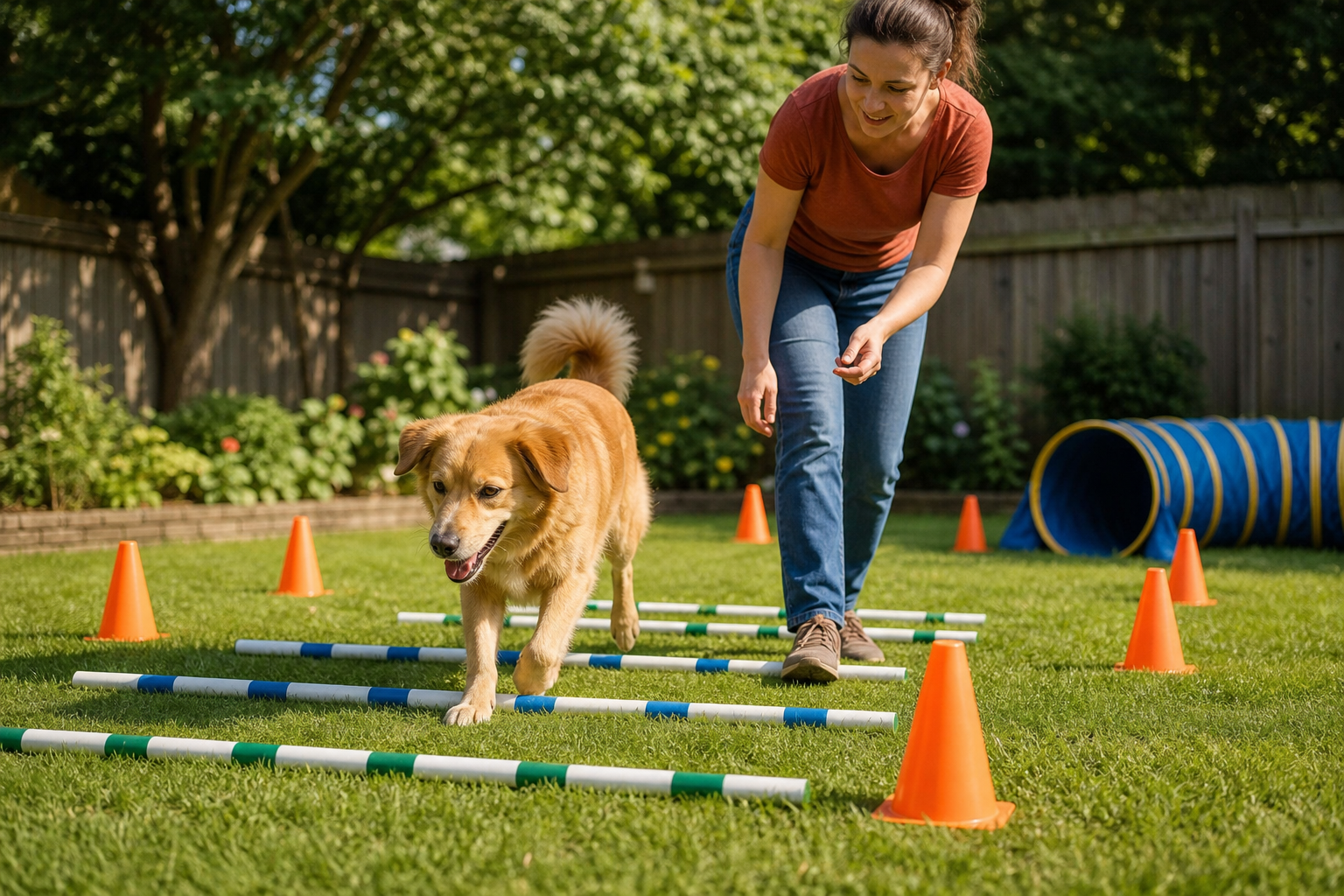
Dog agility looks exciting because it combines movement, focus, teamwork, and fun. Many owners assume it requires a large course, expensive equipment, or advanced training skills, but beginners can start with simple foundations at home. The key is to build confidence, body awareness, and good communication before thinking about speed or complex obstacles.
If you want to introduce agility safely, the best approach is to keep sessions short, reward-based, and suitable for your dog’s age, size, fitness, and personality. Agility should feel like a game, not a test. This guide explains how to get started at home, which foundation skills matter most, and which mistakes to avoid.
What dog agility really teaches
Agility is not only about jumping over things. It teaches dogs to follow cues, move with control, pay attention around distractions, and work as a team with their handler. For many dogs, beginner agility games also provide mental enrichment and help channel energy into structured activity.
At home, your goal is not to recreate a competition course. Instead, focus on basic skills that support future agility training, such as:
- Paying attention to the handler
- Moving around objects confidently
- Waiting briefly before being released
- Following simple directional cues
- Walking over unusual surfaces
- Learning that training is fun and rewarding
Check whether your dog is ready
Before starting, think about your dog’s individual needs. Agility foundations can suit many dogs, but the activities should match their physical development and comfort level.
Good candidates for beginner agility games
- Dogs who enjoy food, toys, or praise as rewards
- Dogs who can focus for short periods
- Dogs who are comfortable moving in new environments
- Dogs with basic mobility and no obvious discomfort during normal activity
Use extra caution if your dog is
- A very young puppy with growing joints
- A senior dog with reduced mobility
- Overweight or deconditioned
- Fearful of new objects or surfaces
- Recovering from illness or injury
If you are unsure whether a type of exercise is appropriate for your dog, it is sensible to ask your veterinarian or a qualified canine rehabilitation or training professional before increasing physical demands. Avoid creating jumps or encouraging sharp turns for dogs who are not physically prepared.
Set up a safe training space
You do not need much room to begin. A living room, hallway, patio, or flat area in the garden can work if it is safe and free of hazards.
Choose a good surface
The safest beginner surface is flat and non-slip. Grass can work well if it is dry and even. Indoors, avoid slippery floors that may cause your dog to lose confidence or strain muscles. You can use yoga mats or other stable non-slip surfaces for simple foundation games.
Remove risks
- Move sharp objects and breakables
- Keep the area clear of clutter
- Avoid unstable chairs, boxes, or makeshift jumps
- Do not train in extreme heat
- Keep sessions short enough to prevent fatigue
Start with these agility foundation skills
Good agility training begins with control and confidence, not height and speed. The following exercises are beginner-friendly and can be taught with household items.
1. Attention and engagement
Before asking your dog to navigate anything, teach them that staying connected with you leads to rewards. Say your dog’s name once, reward eye contact, and take a few steps together. This becomes the basis for moving as a team.
Practice:
- Stand in a quiet space with treats.
- Say your dog’s name once.
- Reward when they look at you.
- Take one or two steps and reward your dog for following.
- Keep sessions under a few minutes.
2. A short wait and release
Agility dogs need to learn that calm waiting is part of the game. Ask for a sit or stand, pause briefly, then release with a cheerful cue such as “go” and reward movement forward. Keep this very easy at first.
3. Walking around cones or markers
Use safe objects such as plant pots, cones, or plastic cups placed far apart. Lure or guide your dog around one object in a smooth curve, then reward. This helps with body awareness and turning without the impact of jumping.
4. Going through a simple tunnel substitute
You do not need a real agility tunnel at first. You can encourage your dog to walk between two rows of objects or through a wide open cardboard structure if it is stable and not frightening. The idea is simply to teach forward movement through a space.
Never force a dog into a narrow or dark tunnel. Confidence comes first.
5. Paw awareness and platform work
Teach your dog to place front paws on a low, stable platform such as a broad step or sturdy raised surface. This develops coordination and rear-end awareness. Reward calm, controlled movement rather than excitement.
6. Ground poles
Lay broom handles or poles flat on the ground with enough space for your dog to step over comfortably. Ground poles are excellent for slow, careful foot placement. They are much safer for beginners than improvised jumps.
How to teach a simple beginner sequence
Once your dog understands a few separate skills, you can link two or three together. For example, ask for a brief wait, release your dog to walk over ground poles, then guide them around a marker and reward.
Keep early sequences very short:
- Start with one easy obstacle or movement.
- Add a second element only when the first is smooth.
- Use clear body language and simple cues.
- Reward generously after each success.
- Stop before your dog gets tired or frustrated.
The goal is fluency and confidence, not endurance.
What not to do when starting agility at home
Many beginner mistakes happen because owners rush into “real” obstacles too soon. That can reduce confidence and increase physical risk.
Avoid these common errors
- Using chairs, furniture, or unstable items as jumps
- Encouraging repeated high jumping
- Training on slippery flooring
- Making sessions too long
- Repeating an exercise until the dog is bored or stressed
- Forcing a nervous dog toward unfamiliar equipment
- Expecting speed before understanding
If your dog hesitates, slows down, looks worried, or disengages, make the exercise easier. Agility foundations should build trust.
How often should you practice?
Short sessions are usually best for beginners. Many dogs learn well with a few minutes of focused practice several times a week. Ending while your dog still wants more can keep motivation high.
A simple beginner routine might include:
- 2 to 5 minutes of engagement and movement games
- 1 or 2 foundation exercises per session
- Plenty of reward breaks
- A rest day if your dog seems tired or mentally overloaded
You can also vary training with walks, sniffing activities, and basic obedience so your dog stays balanced physically and mentally.
Signs your dog is enjoying the training
Every dog shows enthusiasm differently, but positive signs often include:
- Willingly returning to you for another repetition
- Bright, interested body language
- Comfortable movement
- Quick recovery from small mistakes
- Interest in rewards and play
If your dog seems overwhelmed, lower the difficulty, shorten the session, or go back to easier games they already enjoy.
When to move beyond home practice
Home foundations are useful, but a good agility class can help you progress safely. A qualified reward-based instructor can teach proper handling, equipment safety, and how to build skills without overfacing your dog. This becomes especially important before introducing full-height jumps, weave poles, contact equipment, or longer sequences.
Choose a class that emphasizes warm-ups, gradual progression, and confidence-building rather than pressure or punishment.
Keep your training organized
Agility progress is often easier when you track what your dog has learned, which exercises caused hesitation, and how long sessions lasted. This can be especially helpful if several family members train the same dog. A digital organizer such as PLM Pet Life Manager can help keep training notes, routines, and important pet information together so practice stays consistent.
Final thoughts
Starting dog agility at home does not mean building a fast obstacle course in your garden. The smartest beginning is slow, safe, and playful. Teach attention, confidence, body awareness, and simple movement patterns first. Reward generously, protect your dog’s joints and confidence, and remember that success in agility begins with strong foundations.
For many dogs, these early games become a fun way to exercise both body and mind while strengthening the bond with their owner. If you keep the process positive and realistic, home agility practice can be an excellent introduction to a rewarding activity.
https://plm-pet-organiser.com/