How to Calm Cat Aggression at Home: Practical Steps for Safer, Less Stressful Days
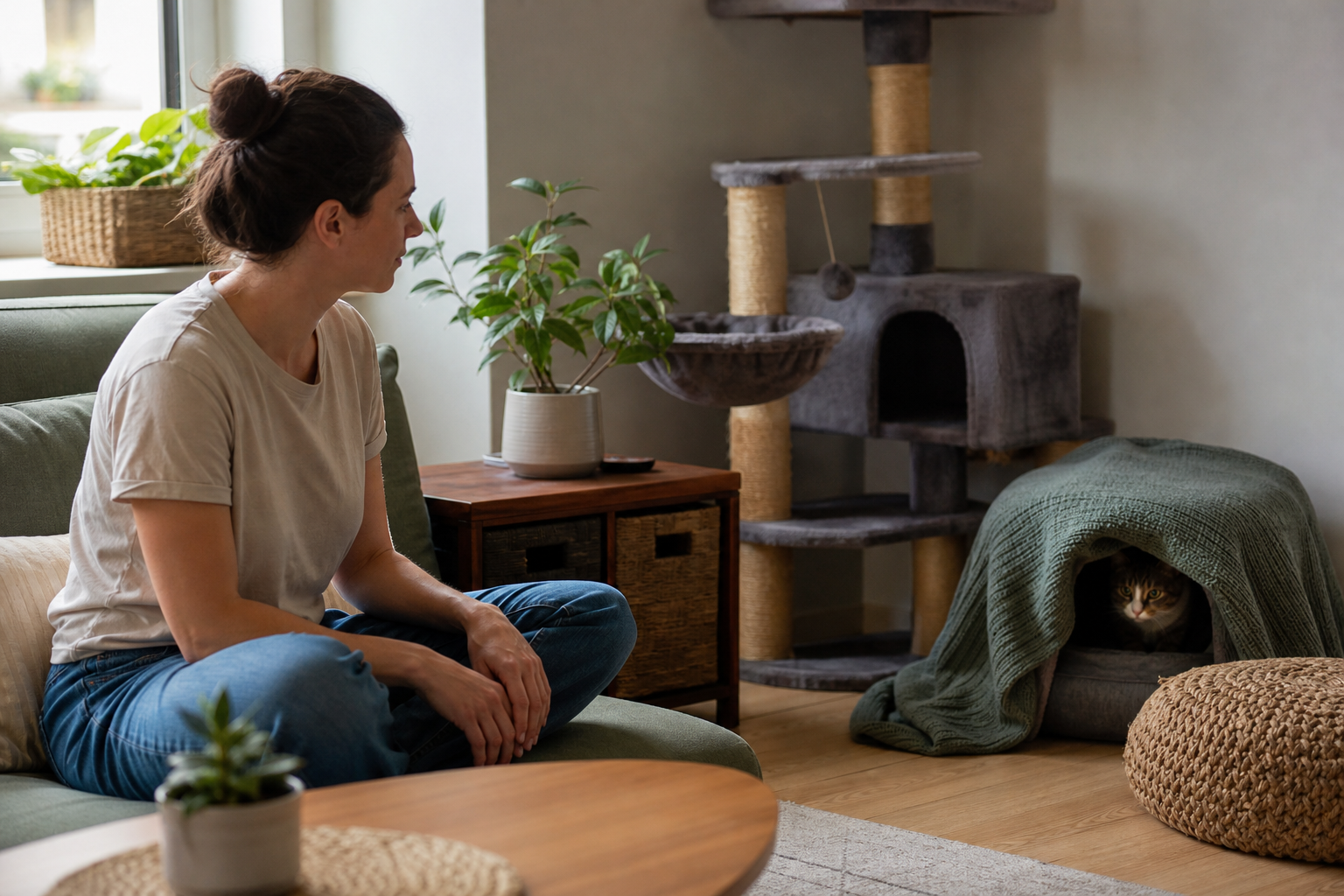
Cat aggression can be upsetting, especially when it seems to appear suddenly or without a clear reason. A cat may swat, bite, stalk, chase, growl, or lash out during petting, feeding, play, or contact with another pet. While aggressive behaviour can look dramatic, it is often a form of communication rather than simple “bad behaviour.”
The safest and most helpful first step is to look at what your cat may be reacting to. Fear, frustration, pain, overstimulation, territorial stress, and redirected arousal can all play a part. Understanding the pattern gives you a much better chance of reducing the behaviour without making your cat more anxious.
This guide explains how to respond safely, identify common triggers, and build a calmer home routine for a cat showing aggressive behaviour.
What cat aggression can look like
Aggression is not always a full attack. Many cats show earlier warning signs before using teeth or claws. Learning these signals can help you step back before the situation escalates.
- Tail lashing or thumping
- Flattened ears
- Stiff body posture
- Dilated pupils
- Growling, hissing, or spitting
- Quick head turns toward your hand during petting
- Swatting without claws or with claws extended
- Biting during handling or play
If you notice these signals regularly, try to end the interaction calmly before your cat feels forced to defend itself.
Common causes of aggression in cats
Fear or defensive behaviour
A frightened cat may become aggressive if it feels trapped or unable to escape. This can happen around visitors, children, unfamiliar animals, loud noises, or forced handling.
Petting-induced overstimulation
Some cats enjoy touch only for a short time. Repeated strokes, especially on sensitive areas such as the lower back or belly, can suddenly feel unpleasant. The cat may bite or swat to make the contact stop.
Play aggression
Kittens and young cats often chase moving feet, hands, or sleeves. This usually starts as rough play, but if it is encouraged with hands instead of toys, it can become painful and harder to manage.
Territorial stress
Cats may react aggressively when they feel another cat is invading their space. This can happen with indoor cats sharing resources or when outdoor cats appear at windows or doors.
Redirected aggression
A cat that becomes highly aroused by something it cannot reach, such as a cat outside the window, may suddenly attack a nearby person or pet instead.
Pain or discomfort
A cat that is hurting may react aggressively to touch, lifting, grooming, or normal handling. Behaviour that changes suddenly always deserves careful attention, because medical causes are possible.
What to do in the moment
If your cat is already aroused or aggressive, focus on safety and reducing stimulation.
- Stop interacting immediately. Do not continue petting, scolding, or trying to hold the cat still.
- Give space. Step back slowly and allow the cat a clear escape route.
- Stay quiet. Loud voices and sudden movement can increase arousal.
- Do not punish. Hitting, shouting, spraying water, or scruffing can increase fear and make future aggression more likely.
- Use a barrier if needed. A cushion, blanket, or door can help you separate yourself safely without confronting the cat.
- Allow time to decompress. Some cats need minutes, while others need much longer before they are ready for calm contact again.
If a fight occurs between cats, avoid reaching in with bare hands. Instead, use a barrier, make distance, and separate them safely if possible.
How to identify your cat’s triggers
Reducing aggression usually starts with pattern recognition. Ask yourself a few simple questions after each incident.
- What happened immediately before the aggression?
- Who or what was nearby?
- Was your cat being touched, picked up, cornered, or disturbed?
- Did another cat appear outside?
- Did the incident happen around food, toys, resting places, or litter boxes?
- What body language appeared first?
Write down the date, time, location, and possible trigger. This makes it easier to see whether the behaviour is linked to handling, visitors, resource competition, play, or a specific room or routine.
Practical steps to reduce cat aggression at home
1. Respect your cat’s warning signs
Do not wait for a bite or scratch. If your cat’s tail starts twitching, the ears flatten, or the body stiffens, pause the interaction. Ending contact early teaches your cat that calm signals work, so it does not need to escalate.
2. Improve the home setup
Many aggressive incidents are linked to stress and competition. A more cat-friendly environment can reduce tension.
- Provide multiple resting spots
- Add vertical spaces such as cat trees or shelves
- Place litter boxes in quiet, accessible locations
- Offer more than one water and feeding station in multi-cat homes
- Create hiding places for retreat and recovery
Cats cope better when they can move away from people, noise, and other animals without feeling trapped.
3. Use toys for play, not hands
If your cat attacks ankles or hands, switch to interactive toys such as wand toys or tossed soft toys. Keep play sessions structured and end them before your cat becomes too intense. Avoid wrestling with your hands, as this teaches the cat that human skin is an acceptable target.
4. Keep routines predictable
Regular feeding, play, quiet time, and cleaning routines can help anxious cats feel more secure. Sudden changes in schedule, visitors, or household noise can contribute to stress-related aggression in some cats.
5. Manage visual triggers
If your cat becomes upset by animals outside, block access to the triggering view when needed. Frosted window film, curtains, or limiting access to a specific room may help reduce repeated arousal.
6. Avoid forced handling
If your cat dislikes being picked up, brushed, or medicated, break the task into smaller steps and pair calm behaviour with rewards. Short, gentle sessions are usually more effective than trying to “get it over with.”
7. Support calm behaviour
Reward your cat when it chooses relaxed, appropriate behaviour. Offer a treat, praise, or play when your cat stays calm during a trigger at a manageable distance. This helps build better associations over time.
Special considerations for multi-cat homes
Aggression between cats can be complex because some conflict is subtle. One cat may block hallways, stare, guard food, or control access to litter boxes without obvious fighting.
To reduce household tension:
- Provide separate resources in different areas
- Do not force cats to share sleeping, feeding, or toileting spaces
- Give each cat escape routes and vertical territory
- Separate cats after serious conflict and reintroduce gradually if needed
- Watch for quiet bullying, not just loud fights
If aggression is frequent or intense, professional behaviour support may be needed to create a safe reintroduction plan.
Mistakes that often make aggression worse
- Punishing the cat after a bite or scratch
- Ignoring early warning signs
- Using hands as toys
- Forcing interaction when the cat wants distance
- Making sudden changes without giving the cat time to adjust
- Assuming the behaviour is “spite” rather than a stress response
Cats do not usually become aggressive to be difficult. In many cases, they are trying to protect themselves, stop an unpleasant interaction, or cope with stress they cannot manage well.
When to contact a veterinarian or qualified behaviour professional
Seek veterinary advice if aggression appears suddenly, becomes more severe, is linked to touch or movement, or happens alongside changes in appetite, litter box habits, grooming, or activity. Pain or illness can contribute to behaviour changes, and a medical check is an important step.
You should also get extra support if bites are frequent, household members feel unsafe, or there is serious conflict between pets. A qualified feline behaviour professional can help identify triggers and create a structured plan based on your cat’s environment and history.
Keeping track of incidents can help
Because aggression often follows patterns, it helps to record what happened before, during, and after each event. Notes about time of day, location, body language, nearby pets, visitors, feeding, and handling can make triggers clearer. For busy households, keeping this information in one place can be easier with a digital pet organizer such as PLM Pet Life Manager, especially when more than one family member cares for the cat.
Final thoughts
Cat aggression can be stressful, but it is often manageable when you look beyond the outburst and focus on the cause. Start with safety, learn your cat’s early signals, reduce triggers, and make the environment easier to navigate. Small changes in handling, play, routine, and home setup can make a meaningful difference over time.
If the behaviour is sudden, intense, or linked to possible discomfort, do not delay getting veterinary advice. Early support is often the best way to protect both your cat’s wellbeing and your household’s sense of calm.
https://plm-pet-organiser.com/