How to Create an Enrichment Routine for Indoor Cats Without Overcomplicating It
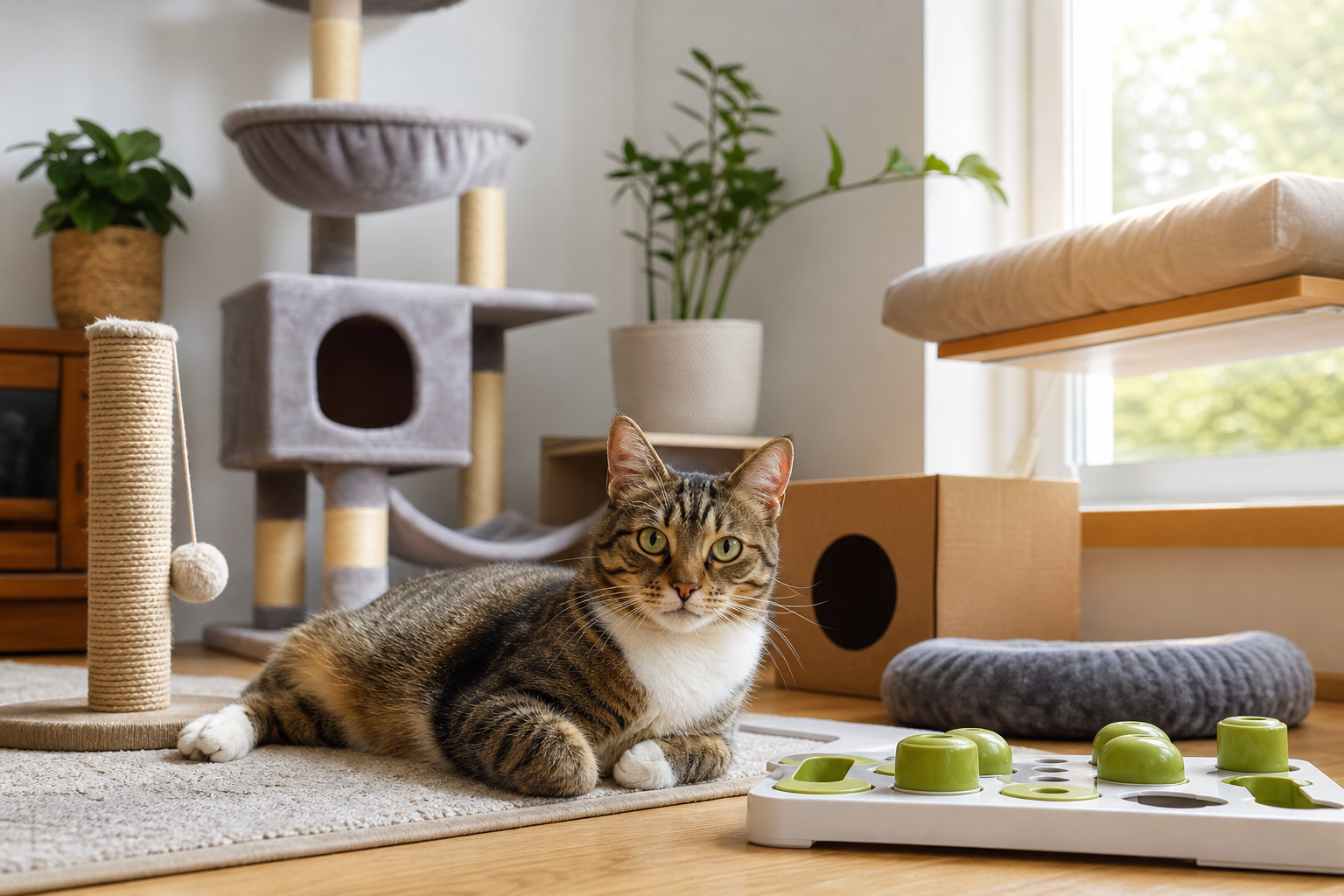
Many indoor cats have safe, comfortable lives, but safety alone does not meet all of their behavioural needs. Cats are natural hunters, climbers, observers, scratchers and problem-solvers. Without enough opportunities to express those instincts, some cats may become bored, restless or destructive. The good news is that enrichment does not need to be expensive or time-consuming. A simple, consistent routine can make a big difference.
This guide explains how to build an indoor cat enrichment routine step by step, what activities to include, and how to adapt the plan to your cat’s age, energy level and personality.
What cat enrichment really means
Enrichment is anything that encourages your cat to use natural behaviours in a safe home environment. That includes play, climbing, scratching, exploring, foraging, resting in secure places and watching the world around them.
Good enrichment is not about keeping a cat busy every minute of the day. It is about offering regular chances to move, think, hunt, observe and relax. A strong routine usually combines physical activity, mental stimulation and environmental variety.
Signs your indoor cat may need more enrichment
Every cat is different, but a lack of stimulation can sometimes show up in everyday behaviour. Watch for patterns such as:
- Frequent night-time zoomies or restlessness
- Scratching furniture despite having a scratching post
- Demanding attention constantly
- Overeating or seeming fixated on food
- Knocking items off shelves repeatedly
- Excessive vocalising for no obvious reason
- Long periods of inactivity followed by intense bursts of energy
These behaviours do not always mean boredom, but they can be a useful reminder to review your cat’s daily routine and environment.
The five parts of a balanced indoor cat enrichment routine
1. Interactive play
Interactive play is one of the most important parts of enrichment because it mimics stalking, chasing and pouncing. Wand toys, feather teasers and soft toys dragged along the floor can work well when used in short sessions.
Try to move the toy like prey rather than waving it randomly in the air. Pause, hide, dart and change direction. Let your cat feel successful by catching the toy regularly.
2. Independent activities
Your cat also needs things to do without you. Puzzle feeders, treat balls, cardboard boxes, tunnels and safe window perches can keep the environment interesting during the day.
Rotate items rather than leaving every toy out all the time. Even familiar objects can feel new again after a short break.
3. Vertical space
Cats often feel more secure when they can climb and observe from above. Cat trees, shelves, sturdy furniture access and window platforms can all add useful territory, especially in smaller homes.
Vertical space is especially valuable in multi-cat homes because it can help each cat choose distance and resting spots.
4. Scratching options
Scratching helps cats stretch, mark territory and maintain their claws. Offer more than one scratching surface, and vary the type if possible. Some cats prefer tall vertical posts, while others like flat cardboard scratchers or angled boards.
Place scratchers near sleeping areas, entrances and favourite resting spots, since cats often like to scratch after waking or while moving through their territory.
5. Sensory enrichment and quiet rest
Enrichment is not only active. Watching birds through a window, sniffing safe natural scents, listening to household sounds and resting in covered beds or quiet corners all matter too. Cats need stimulation, but they also need recovery time in spaces where they feel safe and undisturbed.
How to build a simple daily routine
The easiest way to succeed with enrichment is to keep the routine realistic. A few short sessions spread through the day often work better than one long session that is hard to maintain.
-
Start with two interactive play sessions each day. Aim for around 10 to 15 minutes in the morning and again in the evening.
-
Add one food-based enrichment activity, such as a puzzle feeder, snuffle mat designed for cats, or a small scatter feed using part of the daily meal.
-
Make sure your cat has at least one scratching area, one hiding spot and one raised resting place.
-
Rotate toys every few days so the environment stays interesting without creating clutter.
-
Observe what your cat actually enjoys and adjust the plan instead of copying a perfect routine from someone else.
For many households, this is enough to create a strong foundation.
A sample enrichment schedule for an indoor cat
You do not need to follow a strict timetable, but an example can help.
- Morning: short wand-toy play session followed by breakfast
- Midday: window watching, puzzle feeder or cardboard box activity
- Late afternoon: quiet rest in a comfortable hiding or elevated spot
- Evening: second play session with chasing and pouncing opportunities
- Night: a small independent toy or food puzzle if your cat tends to become active after bedtime
This pattern works well because it alternates activity and rest, which is closer to a cat’s natural rhythm.
Easy enrichment ideas that cost very little
You do not need a house full of gadgets. Many effective enrichment tools are simple household items used safely.
- Cardboard boxes with entry holes
- Paper bags with handles removed
- Blankets draped over chairs to create hiding dens
- Treats hidden in folded towels
- Homemade obstacle paths using cushions and stools
- Safe window access for outdoor viewing
- Short training sessions using rewards and simple cues
Always supervise new items at first and remove anything that could be chewed into unsafe pieces or trap your cat.
How to adapt enrichment for different cats
Kittens
Kittens usually need frequent play and plenty of novelty, but sessions should stay short. They benefit from climbing options, chase games and safe objects to investigate. Because they are still learning, supervise closely and keep the environment safe.
Adult cats
Healthy adult cats often do well with a stable mix of daily play, foraging and quiet observation. If your cat seems uninterested, experiment with different toy styles, movement patterns and times of day.
Senior cats
Older cats still need enrichment, but it may need to be gentler and more accessible. Lower scratching surfaces, easier climbing routes, softer toys and shorter play sessions can help. If your senior cat suddenly becomes less active or stops jumping, it is sensible to discuss any change with a veterinarian.
Shy or newly adopted cats
For nervous cats, start small. A quiet hiding place, a predictable routine and low-pressure toy play from a distance may work better than lots of stimulation at once. Let confidence build gradually.
Common enrichment mistakes to avoid
- Using only laser pointers without offering a final toy to catch
- Leaving toys out permanently until they lose all novelty
- Choosing enrichment that suits the owner more than the cat
- Overstimulating a shy cat with too much activity
- Expecting one expensive item to solve boredom on its own
- Ignoring rest, hiding and observation opportunities
The best enrichment plan is one your cat uses willingly and one you can maintain consistently.
When to review the routine
It is worth reviewing your setup if your cat’s behaviour changes, if you move home, add another pet or notice that favourite activities no longer hold their attention. Cats can also prefer different types of play as they age. A routine should evolve with the individual cat rather than stay fixed forever.
Keeping the routine consistent
Consistency is often more valuable than complexity. If you track feeding times, toy rotation, scratching preferences and activity patterns, it becomes easier to spot what works best. For owners managing multiple cats or busy schedules, using a digital organiser such as PLM Pet Life Manager can help keep routines, notes and pet-care tasks in one place.
Final thoughts
Indoor cat enrichment does not have to be complicated. Focus on a few basics: daily interactive play, opportunities to climb and scratch, some food-based problem-solving, and safe places to rest and observe. Start simple, pay attention to your cat’s preferences and build from there.
A cat-friendly routine is not about constant entertainment. It is about giving your cat regular, meaningful ways to behave like a cat inside your home.
https://plm-pet-organiser.com/